
Breast Cancer Detection in Magnetic Resonance Images using Edge-Enhanced Convolutional Neural Network

Authors

  • Efunbote I. Modinat
    Department of Electrical/Electronic Engineering, Moshood Abiola Polytechnic, Abeokuta, Ogun State, Nigeria.
  • Amusa A. Kamoli
  • Olanipekun J. Ayorinde
  • Okeyode C. Itunu

Keywords:

Breast cancer, Magnetic Resonance Imaging, Edge detection, Harris corner mask, Convolutional Neural Network

Abstract

Early detection of breast cancer plays a crucial role in its diagnosis and treatment. This research presents an edge-enhanced Convolutional Neural Network (CNN) model for breast cancer detection and classification using Magnetic Resonance Imaging (MRI) scans. A dataset of 1480 breast MRI scans (comprising of healthy and diseased MRI breast scans) was sourced from Kaggle, an open repository for medical images. The images were pre-processed via resizing, de-noising, normalization, and contrast enhanced using contrast limited adaptive histogram equalization (CLAHE) to obtain uniform and standard images. Pre-processed images were then split into training, testing and validation sets in the ratio 60:20:20. To enhance the structural descriptors, the grayscale MRI images were further processed by means of Canny edge- and Harris corner- detection algorithms, leading to generation of additional two versions of each of the images: Canny edge map and Harris corner mask. These two versions together with the grayscale version constitute the three inputs that were fed into the CNN model. The CNN model uses three convolutional blocks with rectified linear unit activation, max-pooling, dropout regularization, a sigmoid output, binary cross-entropy loss with Adam optimizer for 15 epochs and batch size of 16. The model achieves an accuracy, precision, recall, and F1-score of 97%, 99%, 95%, and 97%, respectively. The results indicate that incorporating explicit edge and structural information into the CNN input can enhance the aid detection of breast cancer in MRI images
Dimensions

Nenclares, P.; Harrington, K.J. The Biology of Cancer. Medicine 2020. (48): 67–72. [CrossRef]

Siegel, R.L.; Miller, K.D.; Jemal, A. Cancer Statistics, 2020. CA Cancer J. Clin. (70): 7–30. [CrossRef] [PubMed]

Sung, H.; Ferlay, J.; Siegel, R.L.; Laversanne, M.; Soerjomataram, I.; Jemal, A.; Bray, F. Global Cancer Statistics 2020: GLOBOCAN Estimates of Incidence and Mortality Worldwide for 36 Cancers in 185 Countries. CA Cancer J. Clin. 2021, 71, 209–249. [CrossRef]

Momenimovahed, Z.; Salehiniya, H. Epidemiological Characteristics of and Risk Factors for Breast Cancer in the World. Breast Cancer Targets Ther. 2019, 11, 151–164. [CrossRef]

Abdelwahab Yousef, A.J.2017. Male Breast Cancer: Epidemiology and Risk Factors. Semin. Oncol. (44): 267–272. [CrossRef] [PubMed]PubMed]

Deep Learning Methods for Breast Cancer Detection, Classification, and Segmentation Using MRI Scans: A Systematic Review. (2026). [MDPI journal article]. Published September 1, 2026.

Abdullah, K. A., Marziali, S., Nanaa, M., Escudero Sánchez, L., Payne, N. R., & Gilbert, F. J. (2025). Deep learning-based breast cancer diagnosis in breast MRI: Systematic review and meta-analysis. European Radiology, 35, 4474–4489. https://doi.org/10.1007/s00330-025-11406-6.

Tang, W., Zhang, M., Xu, C., Shao, Y., Tang, J., Gong, S., Dong, H., & Sheng, M. (2023). Diagnostic efficiency of multi-modal MRI based deep learning with Sobel operator in differentiating benign and malignant breast mass lesions—a retrospective study. PeerJ Computer Science, 9, e1460. https://doi.org/10.7717/peerj-cs.1460.

Zheng Y., “De-enhancing the dynamic contrast-enhanced breast MRI for robust registration”. In International Conference on Medical Image Computing and Computer-Assisted Intervention, pp:933-941 (Springer, 2007).

ZHENG Y. , Benzheng W.,Hui L. , “Measuring sparse temporal variation for accurate registration of dynamic contrast-enhanced breast MR images”. Computerized Medical Imaging and Graphics, 2015, vol. 46, p. 73-80.

Zhang Q. ,Xiao Y. ,Dai W. ,Suo J. ,Wang C. ,Shi J. , “Deep learning based classification of breast tumors with shear-wave elastography”. Ultrasonics 2016;72:150– doi:10.1016/j.ultras.2016.08.004.

Nahid, A.-A.; Kong, Y. 2017. Involvement of Machine Learning for Breast Cancer Image Classification: A Survey. Comput. Math. Methods Med. 2017, 3781951. [CrossRef] [PubMed]

Skandalakis, J.E. Embryology and Anatomy of the Breast. In Breast Augmentation; Shiffman, M., Ed.; Springer: Berlin/Heidelberg, Germany, 2009; pp. 3–24. ISBN 978-3-540-78948-2.

Bombonati, A.; Sgroi, D.C. 2011. The Molecular Pathology of Breast Cancer Progression. J. Pathol. (223): 308–318. [CrossRef]

Ortega-Martorell S., Riley P., Olier I., Raidou R.G., Casana-Eslava R., Rea M., Shen L., Lisboa P.J.G., Palmieri C. 2022. Breast cancer patient characterisation and visualisation using deep learning and fisher information networks. Sci Rep. 12(1):14004. doi: 10.1038/s41598-022-17894-6. PMID: 35978031; PMCID: PMC9385866.

Fajrin R.H., Setyaningsih D.N.Y., and Nugroho H.A. 2014. Early Detection of Breast Cancer in Mammogram Image Based on Fuzzy Logic, Proceeding of Multidisciplinary Approach for the Sustainability of Health, Yogyakarta (ICBETA 2014), Indonesia, 96-101

Yue W., Wang Z., Chen H., Payne A., and Liu X. 2018. Machine Learning with Applications in Breast Cancer Diagnosis and Prognosis. Designs, 2(2):13. https://doi.org/10.3390/designs2020013

Al Kafaf D., Thamir N.N., Al-Azzawi A. A. 2024. Breast cancer prediction: a CNN approach. Multidisciplinary Science Journal, 6(9), 2024156.

https://doi.org/10.31893/multiscience.2024156

Nour R., Al-Masni M.A., Choi M.T., Kim S., and Kim T.S. 2022. Breast cancer classification from ultrasound images using deep learning with novel data augmentation. Computers in Biology and Medicine, 143:105256.

Mohamed A., Atya A., and Abdel-Rahman E. 2022. Breast cancer diagnosis based on hybrid deep learning models with ultrasound images. Biomedical Signal Processing and Control, 71:103234.

Allugunti V.K. 2022. A novel deep learning model for breast cancer detection and classification. Journal of Biomedical Informatics, 132:104128.

Mohamed A., Atya A., and Abdel-Rahman E. 2022. Breast cancer diagnosis based on hybrid deep learning models with ultrasound images. Biomedical Signal Processing and Control, 71:103234.

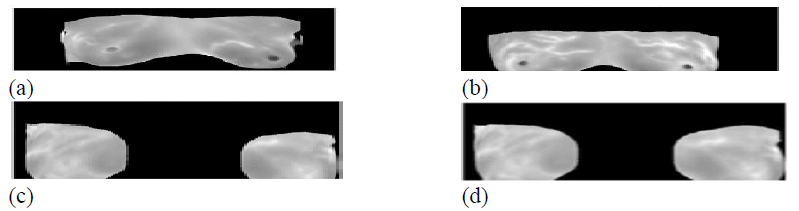
Samples of Images in MRI Dataset (a) MRI Image 1 (b) MRI Image 2 (c) MRI Image 3 (d) MRI Image 4

Published

2026-10-29

How to Cite

Modinat, E. . I., Kamoli, A. A., Ayorinde, O. J., & Itunu, O. C. (2026). Breast Cancer Detection in Magnetic Resonance Images using Edge-Enhanced Convolutional Neural Network. Nigerian Journal of Physics, 35(S), 484-488. https://doi.org/10.62292/njp.v35(s).2026.745

How to Cite

Modinat, E. . I., Kamoli, A. A., Ayorinde, O. J., & Itunu, O. C. (2026). Breast Cancer Detection in Magnetic Resonance Images using Edge-Enhanced Convolutional Neural Network. Nigerian Journal of Physics, 35(S), 484-488. https://doi.org/10.62292/njp.v35(s).2026.745