Development of Machine Learning Model for Climatic Impact Prediction on Health Using AQI Dataset in Africa

Authors

Keywords:

Air Quality Index, Machine Learning, Health Risk, Climatic Impact

Abstract

Air pollution remains one of the major concerns of health crisis in most developing countries with Africa facing a silent health crisis as air pollution worsens, yet predictive tools remain scarce. Pollutants such as PM2.5, NO₂, CO, and O₃ increase the risk of respiratory and cardiovascular diseases. This study develops a Machine Learning (ML) model to predict the Air Quality Index (AQI) and assess health risks across urbanized, industrialized, and rural regions using climatic parameters. A quantitative approach was applied to 23,463 AQI datasets obtained from Kaggle World AQI database. The data was pre-processed and feature engineering was used to remove null values and outliners then splitted into ratio 70:30 for training and testing. Four algorithms namely; Linear Regression, k-Nearest Neighbours, Decision Tree and Random Forest were evaluated using metrics such as R-Squared (R2), Root Mean Squared Error (RMSE) and Mean Absolute Error (MAE). The result shows that Random forest model (R2 = 0.997316, RMSE = 2.865823, MAE = 0.2955499) demonstrated superior predictive performance followed by KNN (R2 = 0.996820, RMSE = 3.119500, MAE = 0.588252) while Decision Trees (R2 = 0.995046, RMSE = 3.893819, MAE = 0.302845) produced high accuracy with slightly higher error. SVR (R2 = 0.980160, RMSE = 7.792268, MAE = 1.301302) and Linear Regression (R2 = 0.975279, RMSE = 8.968122, MAE = 4.831951) showed moderate accuracy. This research confirms that Machine Learning models are valuable tools for predicting Air quality thus offering a powerful tool for mitigating the impact of deteriorating Air Quality in Africa.

Dimensions

Abdelmalek, M. M., Mahmoud, H., and Shokry, H. (2025). Prognosis of air quality index and air pollution using machine learning techniques. Scientific Reports, 15(1), 25890.

Akhtar, N., Syakir Ishak, M. I., Bhawani, S. A., and Umar, K. (2021). Various natural and anthropogenic factors responsible for water quality degradation: A review. Water, 13(19), 2660.

Amegah, A. K., and Agyei-Mensah, S. (2017). Urban air pollution in Sub-Saharan Africa: Time for action. Environmental pollution, 220, 738-743.

Brauer, M., Freedman, G., Frostad, J., Van Donkelaar, A., Martin, R. V., Dentener, F,and Cohen, A. (2016). Ambient air pollution exposure estimation for the global burden of disease. Environmental science & technology, 50(1), 79-88.

Chicco, D., Warrens, M. J., and Jurman, G. (2021). The coefficient of determination R-squared is more informative than SMAPE, MAE, MAPE, MSE and RMSE in regression analysis evaluation. Peerj computer science, 7, e623.

Data camp (2025) https://www.datacamp.com/blog/top-machine-learning-use-cases-and-algorithms

Essamlali, I., Nhaila, H., and El Khaili, M. (2024). Supervised machine learning approaches for predicting key pollutants and for the sustainable enhancement of urban air quality: A systematic review. Sustainability, 16(3), 976.

Fuller, R., Landrigan, P. J., Balakrishnan, K., Bathan, G., Bose-O'Reilly, S., Brauer, M., and Yan, C. (2022). Pollution and health: a progress update. The Lancet Planetary Health, 6(6), e535-e547.

Hodson, T. O. (2022). Root mean square error (RMSE) or mean absolute error (MAE): When to use them or not. Geoscientific Model Development Discussions, 2022, 1-10.

IPCC, 2021: Climate change 2021-the physical science basis. Interaction, 49(4), 44-45.

Kaggle Air repository (2025) https://www.kaggle.com/datasets/adityaramachandran27/world-air-quality-index-by-city-and-coordinates

Kayode, J. S. (2026). Air Pollution by Carbon Monoxide (CO) Poisonous Gas in Nigeria: A Review Paper. Nigerian Journal of Physics, 35(1), 243-258.

Makoni, M. (2020). Air pollution in Africa. The Lancet. Respiratory medicine, 8(7), e60.

Manisalidis, I., Stavropoulou, E., Stavropoulos, A., and Bezirtzoglou, E. (2020). Environmental and health impacts of air pollution: a review. Frontiers in public health, 8, 14.

Njoku, E. I., Ogunsola, O. E., and Oladiran, E. O. (2019). The Influence of Atmospheric Parameters on Production and Distribution of Air Pollutants in Bayelsa: A State in the Niger Delta Region of Nigeria. Atmospheric and Climate Sciences, 9, 159-171.

Ogunsola, O. E., & Oladiran, E. O. (2011). Models of Greenhouse Gas Concentrations over Tropical Africa Using the Auto-Regressive Moving Average Approach. Journal of Science Research, 10(1), 80-89.s

Ogunsola, O. E. (2012). Effects of Co2 and Ch4 Emissions on Climate Variability in the Tropics (Doctoral dissertation).

Ogunsola, O. E., Njoku, E. I., & Ayokunnu, O. D. (2023). Industrial Air Pollutants Investigation in the Niger Delta Region of Nigeria. Open Access Library Journal, 10, e10319.

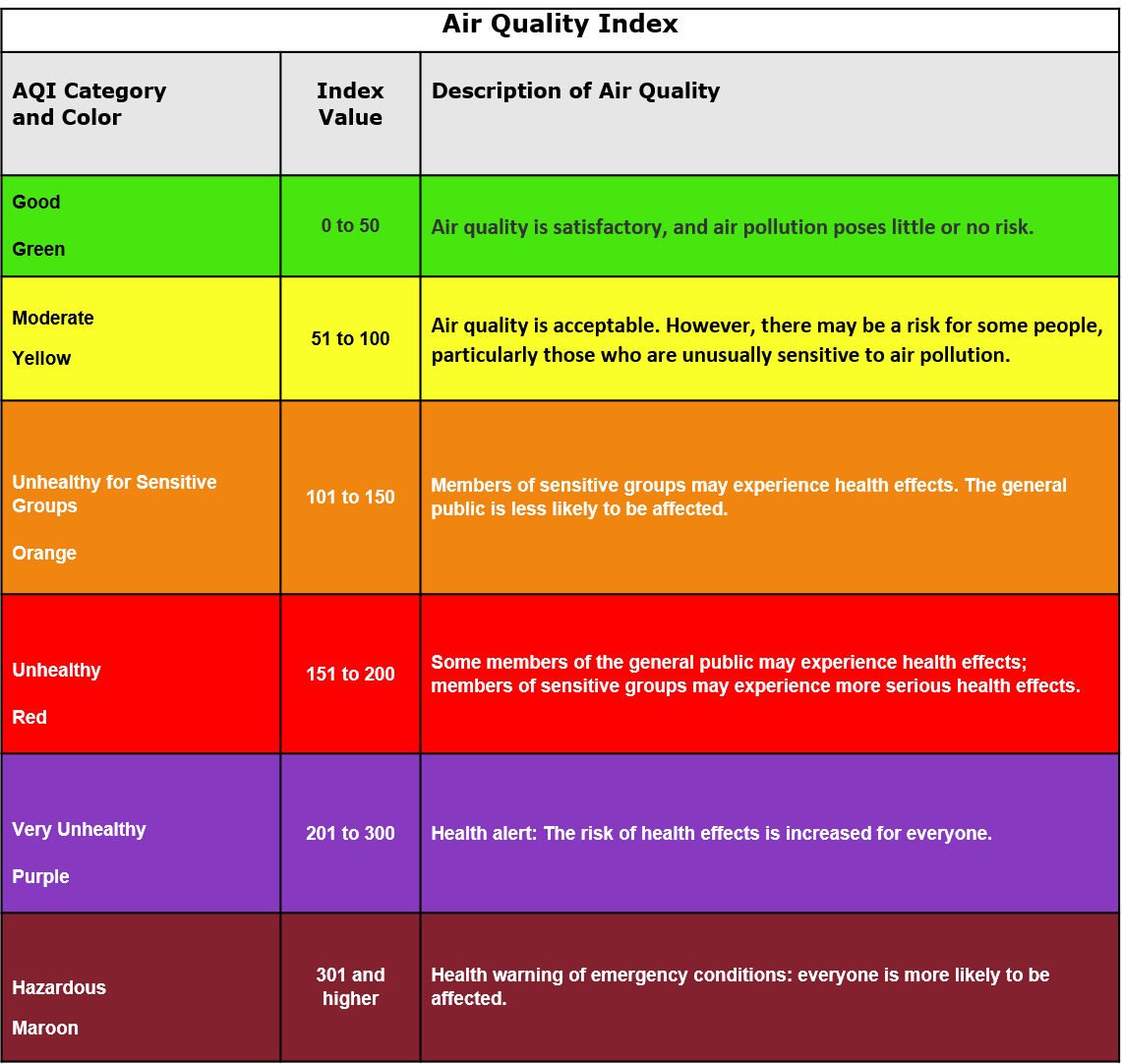
US Environmental Protection Agency 2024 https://www.epa.gov/sites/default/files/2019-07/aqitableforcourse.png

Wiston, M., Sebitla, L. D., Ramaphane, G., and Mbangiwa, N. C. (2024). Air pollution over southern Africa: Impact on the regional environment and public health implication. Journal of Air Pollution and Health, 9(2).

World Health Organization. (2021). WHO global air quality guidelines: particulate matter (PM2. 5 and PM10), ozone, nitrogen dioxide, sulfur dioxide and carbon monoxide. World Health Organization.

Yaya, O. S., Adesina, O. A., Olayinka, H. A., Ogunsola, O. E., & Gil-Alana, L. A. (2023). Long memory cointegration in the analysis of maximum, minimum and range temperatures in Africa: Implications for climate change. Atmosphere, 14(8), 1299.

Published

2026-07-30

How to Cite

Oduah, O. A., Ogunsola, O. E., & Adeleke, O. (2026). Development of Machine Learning Model for Climatic Impact Prediction on Health Using AQI Dataset in Africa. Nigerian Journal of Physics, 35(S), 30-38. https://doi.org/10.62292/njp.v35(s).2026.697

How to Cite

Oduah, O. A., Ogunsola, O. E., & Adeleke, O. (2026). Development of Machine Learning Model for Climatic Impact Prediction on Health Using AQI Dataset in Africa. Nigerian Journal of Physics, 35(S), 30-38. https://doi.org/10.62292/njp.v35(s).2026.697